

Planning a trip to the UK and not sure what to see in London? You’re spoiled for choice. The city packs centuries of history, world-class museums, and modern landmarks into a few square miles, and a lot of the best spots cost nothing to enter. From the ancient Tower of London to the views from the ArcelorMittal Orbit, there’s something here for every kind of traveller, by day or by night. Here are the ten places worth putting at the top of your list.
1. Tower of London
The Tower of London is the city’s most famous historic site, and the one most people start with. The castle sits on the north bank of the River Thames, and its central keep, the White Tower, was built by William the Conqueror around 1078. It has been called the most complete eleventh-century palace in Europe. Inside the White Tower you’ll find St John’s Chapel, one of the oldest churches in London. The site also guards the Crown Jewels. If you can, stay for the Ceremony of the Keys, a locking-up ritual that has run almost every night for more than 700 years, making it one of the most atmospheric things to see in London after dark.

2. The London Eye
The London Eye is a giant observation wheel on the South Bank of the Thames, directly across from the Houses of Parliament. When it opened it was the tallest Ferris wheel in the world, and it’s still one of the city’s signature paid attractions. The wheel carries 32 enclosed, air-conditioned capsules, each holding around 25 people, and it turns slowly at about 26 centimetres per second, so a full rotation takes roughly half an hour. Ride it near sunset and you’ll watch the whole city light up. A night ride is an experience on its own.

3. The British Museum
Founded in 1753, the British Museum is over 270 years old and remains one of the best free things to do in London. It sits on Great Russell Street and holds roughly eight million objects covering art, culture, and human history from every corner of the world. Highlights include the Rosetta Stone, the Egyptian mummies, and the Parthenon sculptures. You could spend a full day here and still not see it all, so pick a few galleries before you go.
4. St Paul’s Cathedral
St Paul’s Cathedral is one of London’s most recognisable landmarks. Designed by Sir Christopher Wren and completed in the early 1700s, it’s famous for both its interior and exterior, crowned by a vast dome that defined the skyline for centuries. At about 365 feet (111 metres) tall, it’s among the highest churches in the United Kingdom. Climb up to the Whispering Gallery and the outdoor viewing galleries for one of the best free-with-admission views in the city.

5. Buckingham Palace
Buckingham Palace is the official London home of the British monarch and one of the most photographed buildings in the country. With 775 rooms behind its famous gates, it’s a working royal residence, so most of it stays private. The big draw outside is the Changing of the Guard, a ceremony of marching and music that happens on set days through the year. In late summer, the lavish State Rooms open to visitors, which is the only time you can step inside.
6. Tower Bridge
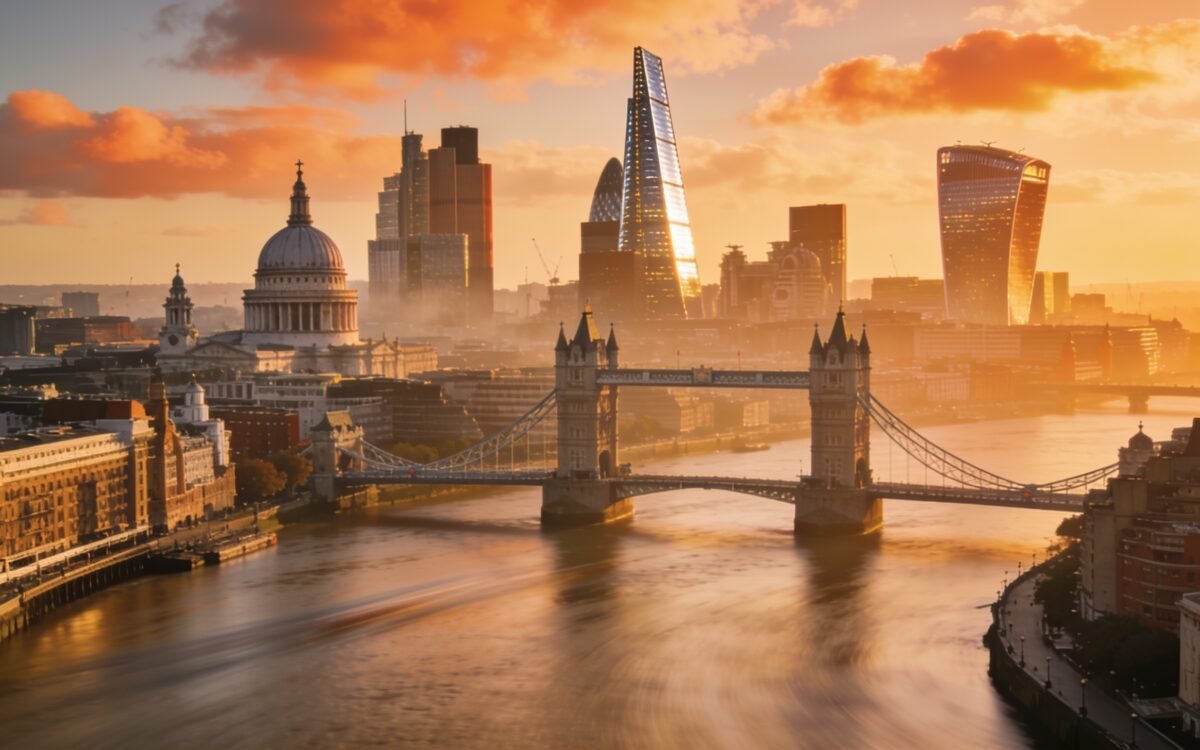
People often mix up Tower Bridge with London Bridge, but it’s Tower Bridge, with its two Gothic towers and blue suspension cables, that everyone pictures. The Victorian bascule bridge opened in 1894 and still lifts to let tall ships pass. Inside, the Tower Bridge Exhibition takes you up to the high-level walkways, where a glass floor lets you look straight down at the road and river below. It’s a short walk from the Tower of London, so the two pair up nicely in one outing.

7. Westminster Abbey and Big Ben
The Westminster area holds two icons side by side. Westminster Abbey is a Gothic church that has hosted royal coronations since 1066, along with royal weddings and the tombs of monarchs, poets, and scientists. Next door stands the Palace of Westminster, home of the Houses of Parliament, with the Elizabeth Tower and its great bell, Big Ben, at one end. Walk across Westminster Bridge for the classic postcard view, especially when the stone glows at golden hour.

8. The Shard
For a modern counterpoint to all that history, head to The Shard. At 310 metres (1,016 feet), this glass spire is the tallest building in the United Kingdom and one of the tallest in Western Europe. The View from The Shard, spread across the top floors, gives you a 360-degree look over the whole city, on a clear day you can see for around 40 miles. Go around sunset to catch London in daylight and after dark in a single visit.
9. Natural History Museum
The Natural History Museum in South Kensington is another world-class museum that’s free to enter, and a favourite with families. Its cathedral-like main hall, Hintze Hall, is anchored by the skeleton of a blue whale suspended overhead. Inside you’ll find the famous dinosaur gallery, an earthquake simulator, and tens of millions of specimens. The building itself, with its carved stone animals and grand arches, is worth the trip alone.
10. Hyde Park and Trafalgar Square
Round off your trip with some open air and people-watching. Hyde Park is one of the city’s great royal parks, with the Serpentine lake, gardens, and Speakers’ Corner, where anyone can stand up and have their say. A little to the east, Trafalgar Square is the lively heart of the city, marked by Nelson’s Column, the four bronze lions, and fountains, with the free National Gallery looking over it. Both are easy, no-cost ways to soak up London between the big sights.
Tips for planning your London trip
A few things make a London visit smoother:
- Many of the best attractions, including the British Museum and the Natural History Museum, are free, so you can see a lot on a tight budget.
- Get an Oyster card or use contactless payment for the Tube and buses; it’s cheaper than paper tickets.
- Book paid attractions like the London Eye and The Shard online in advance to skip the longest queues.
- Wear comfortable shoes. London is a walking city, and many sights sit close enough to cover on foot.
- Give yourself at least three to four days to see the highlights without rushing.
Frequently asked questions
What is the best place to visit in London?
The Tower of London is the most popular single attraction, but the best spot depends on your taste. History lovers head to Westminster Abbey and the Tower, while the London Eye and The Shard are best for views.
Which London attractions are free?
Several of the biggest, including the British Museum, the Natural History Museum, the National Gallery, Hyde Park, and Trafalgar Square, are free to enter.
How many days do you need in London?
Three to four days is enough to cover the main landmarks. A week lets you add day trips and explore neighbourhoods at a slower pace.
What is the most famous landmark in London?
Big Ben and the Houses of Parliament, along with Tower Bridge, are the images most associated with the city.
Is London expensive to visit?
It can be, but free museums, public transport, and the many parks make it possible to enjoy London on a modest budget.


[…] that feel ordinary by day turn lively after dark. If you’ve already worked through the best places to visit in London during the daytime, the evenings are where the trip gets a second wind. Here are twelve things to […]