India has spent the last decade turning itself into one of the world’s serious space powers. The Mars Orbiter Mission reached the red planet in 2014 on the first attempt. Chandrayaan-3 put a lander near the Moon’s south pole in 2023, a first for any country. And running underneath all of it is one machine that keeps doing the heavy lifting: GSLV Mark III. That same rocket is now the one meant to carry the first Indian astronauts into orbit. Here’s how it works, what it has already done, and how close India really is to a manned space mission.
What is GSLV Mark III?
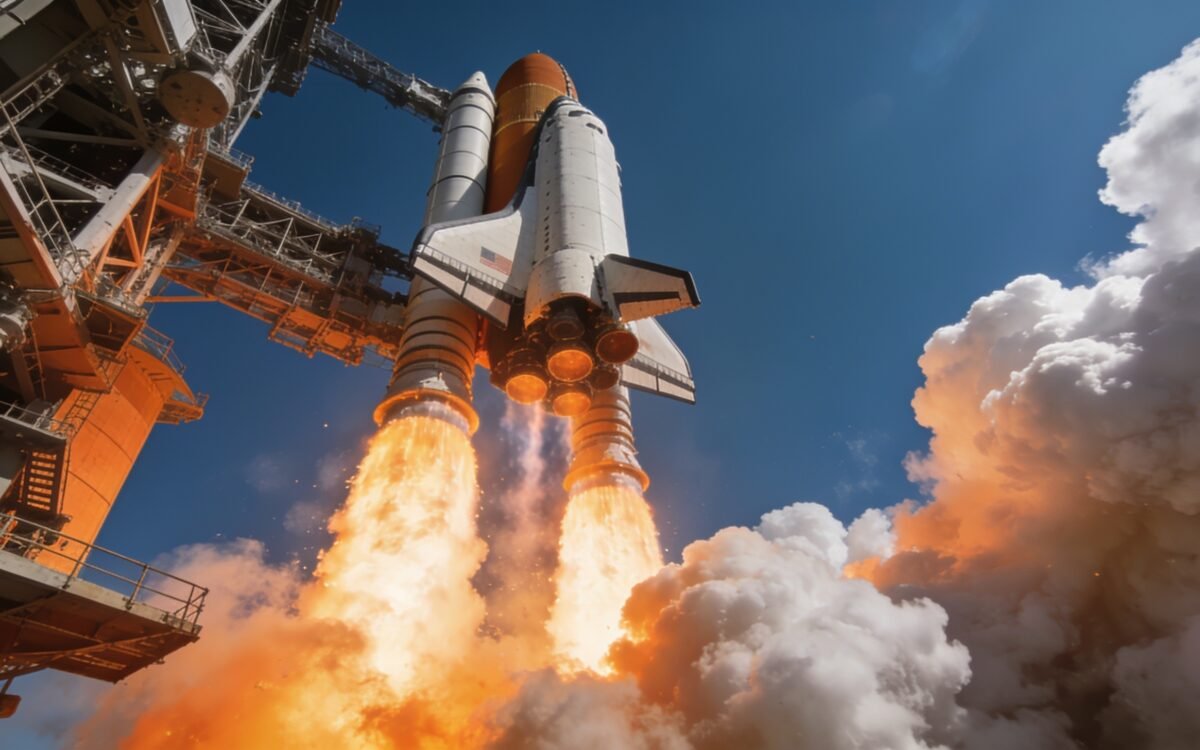
GSLV Mark III is the most powerful rocket India has ever built. In 2022 ISRO renamed it LVM3 (Launch Vehicle Mark-3), so if you see both names, they’re the same vehicle. It stands around 43 metres tall, weighs about 640 tonnes at lift-off, and can put roughly four tonnes into the high orbits used by communication satellites, or about eight tonnes into low Earth orbit.
It was built to make India self-reliant. Before it, ISRO had to pay other countries to launch its heavier satellites. The rocket has more than proven itself since: it launched Chandrayaan-2 in 2019, carried Chandrayaan-3 to its historic Moon landing in 2023, and flew batches of commercial OneWeb internet satellites, earning India money on the global launch market. For a rocket that grew out of a programme dogged by early failures, that’s a remarkable turnaround.
The 2014 test flight that started it all
The story of GSLV Mark III as a crew rocket really begins on 18 December 2014. ISRO flew the rocket on an experimental sub-orbital mission carrying a payload called CARE (Crew module Atmospheric Re-entry Experiment), a mock-up of the capsule that would one day hold astronauts.
The flight lifted off in the morning from Sriharikota and pushed the nearly four-tonne CARE module to a height of about 126 kilometres. The module then separated, re-entered the atmosphere, and came down safely into the Bay of Bengal under its parachutes, exactly as planned. That one test, which cost around ₹155 crore, proved several things at once and set the template for everything ISRO is doing today.

Why that test mattered
The 2014 experimental flight had a few clear goals, and it’s worth spelling them out because they map directly onto the crewed programme:
- A first step toward human spaceflight. It tested a launcher capable of carrying a crew-sized load of around four tonnes.
- Performance under stress. It checked how the rocket behaved in demanding atmospheric conditions while carrying a heavy payload.
- Re-entry data. It studied how the CARE crew module handled the punishing heat and forces of coming back through the atmosphere.
- Self-reliance. It moved India closer to launching its own heavy communication satellites instead of renting foreign rockets.
Gaganyaan: India’s first manned space mission
The crewed programme that all of this feeds into is called Gaganyaan. The plan is to send Indian astronauts, called Gaganyatris, into low Earth orbit around 400 kilometres up, on a mission lasting about three days, using a human-rated version of GSLV Mark III known as HLVM3. The government has backed it with a budget of roughly ₹20,193 crore (about $2.1 billion).
ISRO is taking the careful route. Before anyone flies, the rocket and capsule have to pass three uncrewed test flights. The first, Gaganyaan-1, is set to fly in 2026 carrying Vyommitra, a half-humanoid robot that will sit in the crew seat, talk to ground control, and report back on the life-support and cabin systems. Two more uncrewed flights, G2 and G3, follow after that. Only then comes the crewed flight, now targeted for early 2027.
Four Indian Air Force test pilots have been picked for the mission: Prasanth Balakrishnan Nair, Ajit Krishnan, Angad Pratap and Shubhanshu Shukla. Shukla has already been to space, flying to the International Space Station in 2025 on the commercial Axiom-4 mission. When the crewed flight happens, India will become only the fourth country to launch its own astronauts on its own rocket, after Russia, the United States and China.

What comes after Gaganyaan
ISRO chairman Dr. V. Narayanan and the government have laid out a much longer roadmap. India plans to build its own space station, the Bharatiya Antariksh Station, by around 2035, and to land an Indian astronaut on the Moon by 2040. Gaganyaan is the foundation all of that is built on, which is why every test of GSLV Mark III is watched so closely.
Frequently asked questions
What is GSLV Mark III?
It’s India’s most powerful rocket, capable of carrying about four tonnes to high orbit. It was renamed LVM3 in 2022 and is the launcher for India’s crewed missions.
Is GSLV Mark III the same as LVM3?
Yes. ISRO renamed GSLV Mark III to LVM3 (Launch Vehicle Mark-3) in 2022. A human-rated version, HLVM3, will carry astronauts.
When is India’s first manned space mission?
The first crewed Gaganyaan flight is targeted for early 2027, after three uncrewed test flights, the first of which flies in 2026.
How many astronauts will Gaganyaan carry?
Up to three astronauts, on a mission lasting about three days in low Earth orbit.
Who is the ISRO chairman?
Dr. V. Narayanan is the chairman of ISRO and Secretary of the Department of Space.