
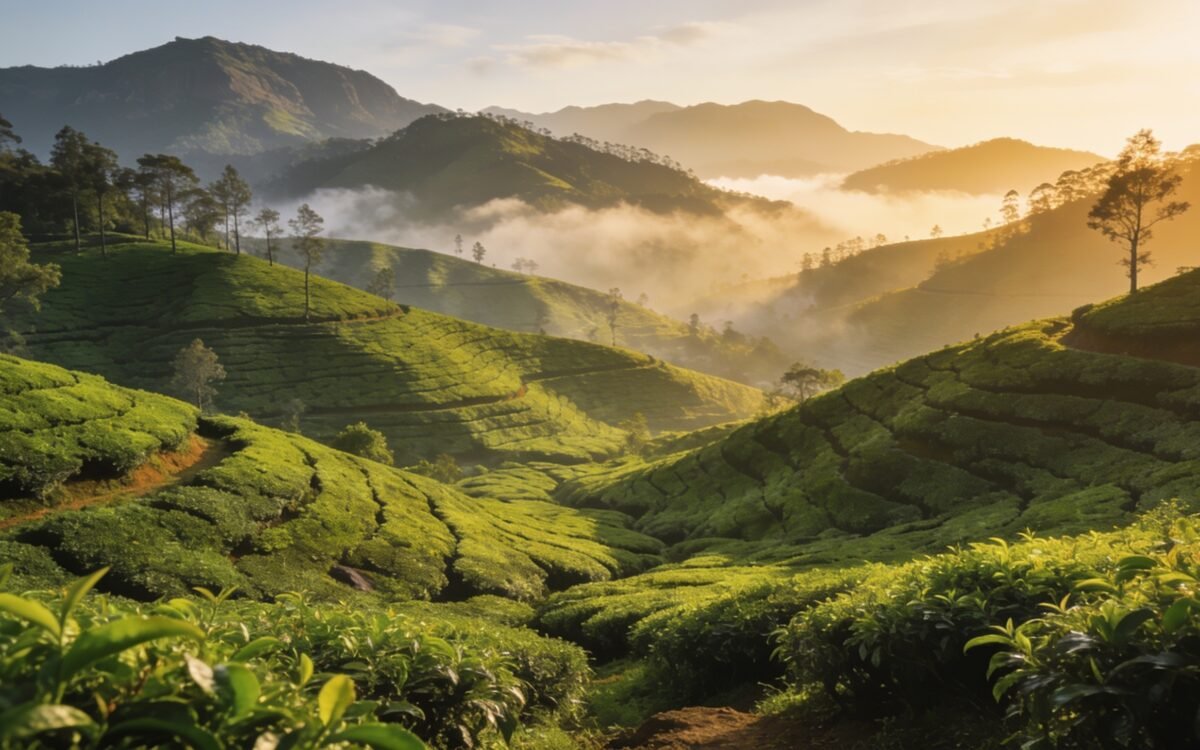
Ask five people when to visit Munnar and you’ll get five different answers, and honestly, most of them will be right. Perched at around 1,600 metres in Kerala’s Western Ghats, Munnar is one of those rare hill stations that never really has a bad month. It’s cool when the rest of Kerala is sweating through 38-degree afternoons, green when the plains have gone dusty, and misty in a way that makes even a rainy Tuesday look like a postcard.
That doesn’t mean every month is the same trip, though. December feels nothing like June. If you show up expecting one and get the other, it can throw your whole plan off. So here’s what actually changes, month by month, so you can pick the version of Munnar you want.
Why Munnar doesn’t follow Kerala’s usual rules
Most of Kerala runs on two seasons: hot and monsoon. Munnar, sitting high above the coastal plains, plays by different rules. The altitude keeps daytime temperatures in a fairly narrow band all year, usually somewhere between 15°C and 30°C, and nights are almost always cooler than you’d expect for a state this far south. Even in peak summer, when Kochi is baking, Munnar rarely climbs past the high 20s. That’s the whole reason the British planted tea here in the first place, and it’s the same reason honeymooners and trekkers keep coming back.
Winter: December to February
This is Munnar at its most photogenic, and also its most crowded.
December is when peak season properly kicks in. Days sit around 20-25°C, but nights can drop to 5-11°C, cold enough that you’ll actually want the jacket you packed. Christmas and New Year bring a serious rush of domestic tourists, and hotel prices climb 50 to 80 percent above off-season rates. Skies are clear, visibility from viewpoints like Top Station is excellent, and it’s genuinely one of the best-looking months to be there, if you don’t mind sharing it with everyone else. Book your stay and cab at least a month out if you’re travelling over the holidays.
January carries the same cold, clear pattern, and it’s still busy, though a notch less frantic than the Christmas fortnight itself.
February is the quiet sweet spot inside winter. The weather is nearly as good as December and January, but the crowds have thinned and prices ease off. Days warm up to 18-25°C while nights stay a comfortable 10-14°C. It’s also a decent month for wildlife at Eravikulam National Park, since water sources start drying up and animals, including the Nilgiri tahr Munnar is known for, gather closer to the streams that remain.
Summer: March to May
Kerala’s plains start cooking around now, but Munnar barely notices.
March is where the tourist season starts easing off. Temperatures run 15-26°C, the tea plantations are still deep green, and morning mist is common. Prices drop 20 to 30 percent from peak, which makes it one of the better value months if the weather still matters to you but your budget doesn’t stretch to December rates.
April and May are the warmest months Munnar gets, though "warm" here is relative. While the lowlands hit 35-38°C, Munnar stays in the high teens to high twenties during the day. This is when travellers from neighbouring Tamil Nadu show up in numbers, mostly to escape exactly that plains heat. Hotel rates hit their lowest point of the year, 30 to 40 percent below peak. The trade-off is afternoon thunderstorms, especially by May, and they can be sudden and dramatic even if they don’t last long. Plan outdoor time for the morning and you’ll dodge most of it.
Monsoon: June to September
This is the season most guidebooks tell you to skip, and honestly, they’re only half right.
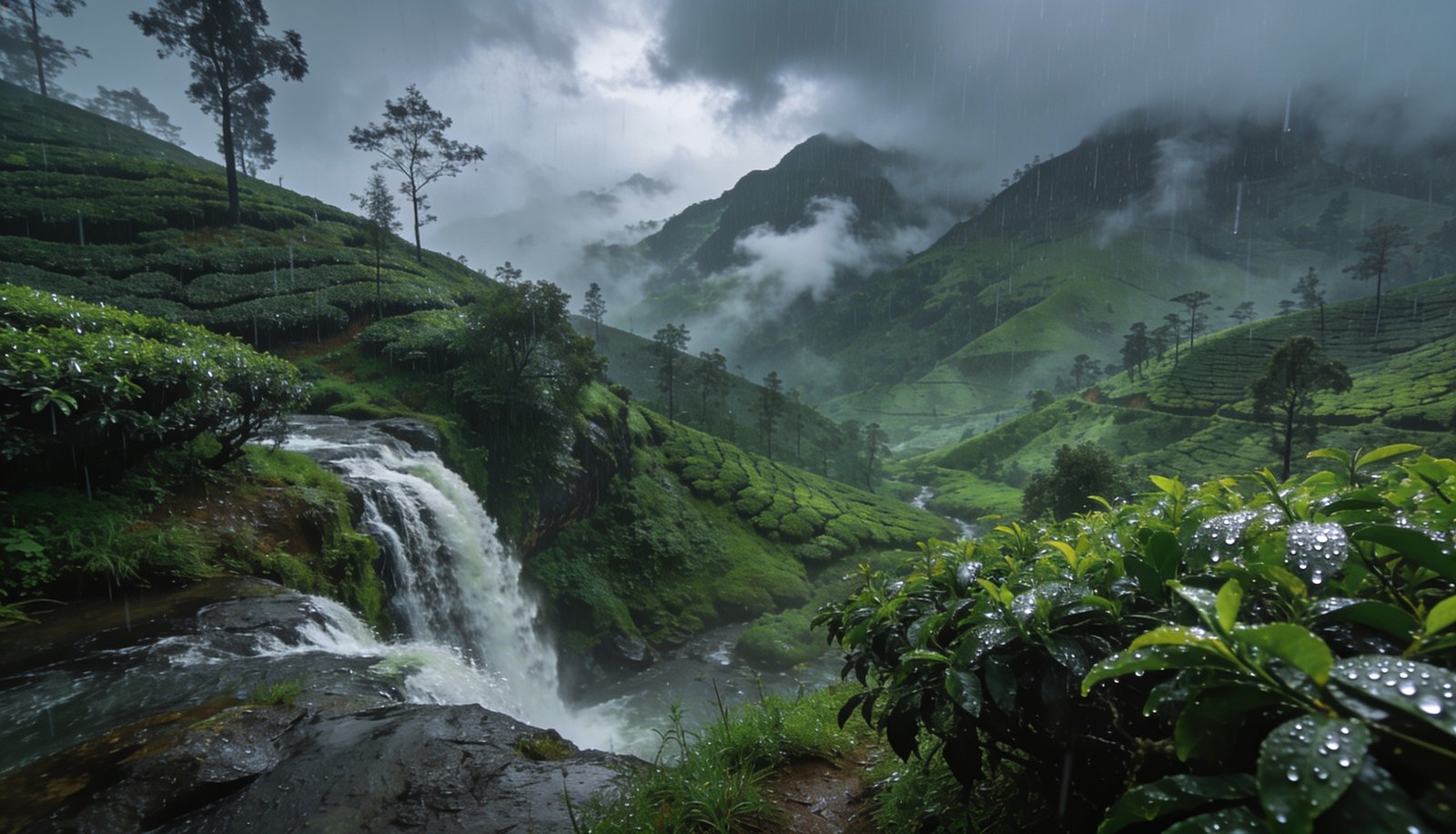
June and July are the wettest months of the year, July especially, with rainfall regularly topping 400mm. This is genuine monsoon, not a light drizzle: roads can get slippery, landslide risk goes up on the ghat sections, and some routes see temporary closures. If your trip depends on a specific day for a specific view, this isn’t the month to bank on it. But if you don’t mind rain and want Munnar at its most dramatic, with waterfalls running full and everything soaked in green, it’s here.
August starts to ease, the haze thins a little, and you get a mix of rain and real sunshine.
September is where the monsoon quietly becomes the best-kept secret on this list. Rain tapers to occasional showers rather than sustained downpours. The landscape is at its absolute lushest, waterfalls are still powerful, crowds are thin, and prices stay low. If you want the beauty of the monsoon without gambling on being stuck indoors for three days straight, September is the trade.
Post-monsoon: October and November
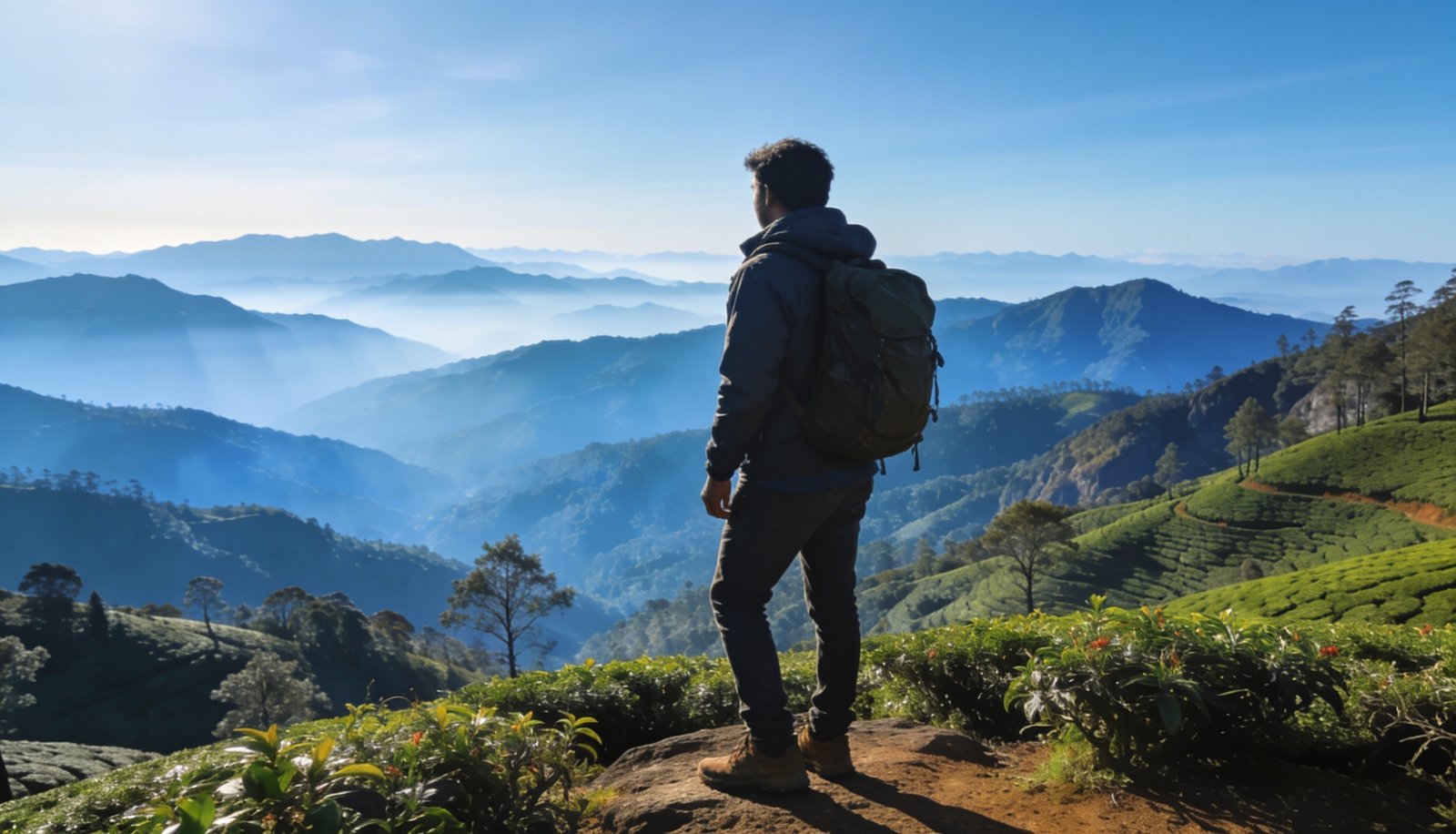
These two months might be the most underrated stretch on the calendar. The rains have just pulled back, the hills are impossibly green, and the waterfalls are still thundering from everything they absorbed over the previous months. Crowds haven’t arrived yet, since most people wait for December. If you want Munnar’s best scenery without Munnar’s busiest prices, this is very often it.
Best time by what you’re actually after
Honeymooners: November and December, for the mist, the cooler air, and the general postcard factor. Just book ahead for December.
Budget travellers: April, May, or September, all offering 30-40 percent off peak pricing with weather that’s still genuinely pleasant.
Trekkers and adventure travellers: October through February, when trails are dry, visibility is good, and you’re not fighting monsoon mud.
Photographers: September through November, for the deepest greens and the clearest post-monsoon light.
Families with kids: December to February, simply because everything, from resorts to activities, runs at full capacity in this window.
Wildlife spotters: February to April, when animals cluster near the remaining water sources at Eravikulam.
What to pack, whenever you go
A few things hold true regardless of month. Bring a warm layer even if you’re visiting in summer; evenings cool down fast at this elevation, and December-January nights genuinely need a proper jacket, not just a light sweater. Pack for sun too, since the altitude means stronger UV even on overcast days, so sunscreen isn’t optional. If you’re going between June and September, a compact rain jacket and shoes you don’t mind getting wet will save your trip. And bring spare camera batteries in the cooler months; cold weather drains them faster than you’d expect.
One thing worth knowing
Munnar is also home to the Neelakurinji, a flower that famously blooms only once every twelve years, turning entire hillsides purple-blue. It last flowered in 2018, and the next bloom isn’t expected until around 2030, so it’s not something you can plan a regular trip around, but it’s worth knowing the story if you’re wondering why locals sometimes bring it up.
Frequently asked questions
What is the single best month to visit Munnar?
September to November tends to offer the best mix of scenery, low crowds, and reasonable prices, though December and January have the clearest, most reliable weather if you don’t mind the crowds.
Is Munnar worth visiting during monsoon?
Yes, particularly September, when the rain has eased but the landscape is still at its greenest. June and July are heavier and riskier for road travel.
Does Munnar get cold enough for snow?
No. Nights can drop to 5°C in peak winter, but Munnar doesn’t see snowfall.
How many days do you need in Munnar?
Three days covers the main sights comfortably; four or five gives you room for a trek or a slower pace through the tea estates.
Is Munnar crowded during Christmas and New Year?
Very. Hotel rates rise 50-80 percent and popular viewpoints get busy. Book accommodation and transport at least a month in advance if travelling in this window.
Weather patterns are based on long-term averages and can vary year to year. Check a short-range forecast before finalising your travel dates, especially during monsoon months.